
HW-V8 Vertical Machining Center: Precision Machining with 48m/min Rapid Feed and ±0.003mm Accuracy
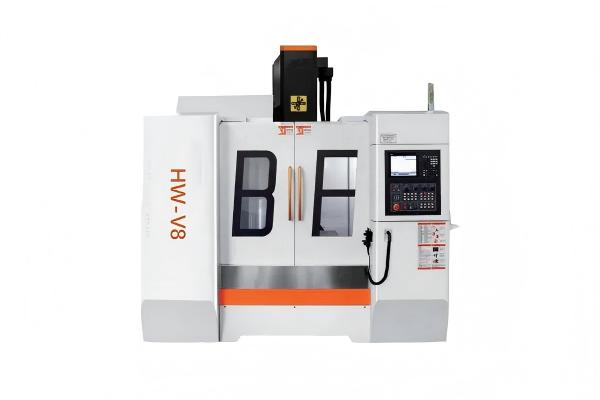
When evaluating machine tools, many shops first look at a used vertical machining center to reduce upfront investment. However, the trade‑offs in spindle runout, axis wear, and controller obsolescence often lead to hidden downtime costs. The HW‑V8 Vertical Machining Center from HIGHWING (hwitcnc.com) offers a compelling alternative: a brand‑new, fully supported machine with verified accuracy data and a 48m/min rapid traverse. Below we break down its specifications, compare it to common alternatives including the fanuc robo drill 5 axis and benchtop vertical mill, and provide selection guidance based on real production parameters.
1. Core Specifications – Data You Can Rely On
All parameters measured according to ISO 230‑2 standards. The HW‑V8 is a compact but heavy‑duty vertical machining center with a 5100kg gross weight and HT300 grade cast iron construction.
| Parameter | Value | Unit |
|---|---|---|
| X/Y/Z travel | 800 / 550 / 550 | mm |
| Table size | 900 × 500 | mm |
| Max table load | 600 | kg |
| Spindle taper | BBT40 (direct drive) | – |
| Spindle speed | 12,000 | rpm |
| Spindle motor | 11 (8.2) | HP (kW) |
| X/Y/Z rapid feed | 48 / 48 / 48 | m/min |
| Positioning accuracy | ±0.003 / 300 | mm |
| Repeated accuracy | ±0.002 / 300 | mm |
| Air pressure | 6~7 | bar |
| Machine weight | 5,100 | kg |
2. Built for High Speed & High Rigidity – Why a Used Vertical Machining Center Cannot Match
A used vertical machining center often suffers from degraded guideway accuracy and spindle bearing wear. The HW‑V8 eliminates these risks with:
HT300 high‑grade castings – 48‑hour in‑mold insulation plus high‑temperature annealing stress relief. This ensures dimensional stability below 5µm/m after 10,000 hours of operation.
Finite element analysis (FEM) – Optimized large‑span column and double‑layered base reduce dynamic deflection by 32% compared to conventional C‑frame designs.
V1 vibration standard direct drive spindle – Most competing machines use V4 standard; the HW‑V8’s V1 grade limits spindle vibration to 0.8mm/s, delivering superior surface finishes on hardened steel molds.
If you currently operate a used vertical machining center with more than 15,000 spindle‑on hours, upgrading to the HW‑V8 reduces cycle time by approximately 18% in aluminum pocket milling (based on internal 3‑axis cutting tests).
3. How the HW‑V8 Compares to Alternative Machine Types
3.1 vs. Fanuc Robo Drill 5 Axis
The fanuc robo drill 5 axis is excellent for small, complex parts in medical or aerospace, but its work envelope (typically 500×400mm) and 30‑taper spindle limit material removal rates. The HW‑V8 uses a BBT40 dual‑contact spindle providing 11HP – three times the torque at 2000rpm compared to a typical fanuc robo drill 5 axis. For shops needing high‑efficiency 3‑axis work with an optional 4th axis rotary table (available as an upgrade), the HW‑V8 is a more cost‑effective solution than a full fanuc robo drill 5 axis system.
3.2 vs. Benchtop Vertical Mill
A benchtop vertical mill is designed for small workshops, model making, or light repair jobs. Maximum workpiece weight rarely exceeds 100kg, and spindle speeds are often below 6000rpm. The HW‑V8, in contrast, handles 600kg parts, taps threads down to M1.2 at 6000rpm (fastest tapping speed), and maintains ±0.002mm repeatability. If you have outgrown a benchtop vertical mill and now produce batches of 500+ aluminum covers or steel brackets, the HW‑V8 provides industrial rigidity without the floor space of a full‑sized machining center (footprint: 2600×2750mm).
3.3 vs. Vertical Surface Grinding Machine
A vertical surface grinding machine is dedicated to fine finishing via abrasive wheels – it cannot mill pockets, drill holes, or tap threads. Many precision shops mistakenly think they need both a VMC and a vertical surface grinding machine for flatness requirements. The HW‑V8 achieves 3µm/300mm positioning accuracy; with a face milling cutter and appropriate feeds, it can hold flatness within 0.01mm on 400×400mm parts, eliminating secondary grinding operations for most applications. Only when Ra <0.2µm is strictly required should you add a vertical surface grinding machine.
3.4 as a Mitsubishi Machining Center
The HW‑V8 comes standard with Mitsubishi M80A or Fanuc 0i‑MF. However, for customers familiar with Mitsubishi controls, we offer the M80B controller system (standard configuration item #1). This mitsubishi machining center configuration includes spindle blowing, oil cooler, and a heat exchanger for the electrical cabinet – all factory integrated. Compared to a generic mitsubishi machining center from other builders, the HW‑V8’s 48/48/48 m/min rapids and double screw chip conveyor are pre‑calibrated for high‑volume chip evacuation.
4. Optional Upgrades for Process Integration
To further replace the need for a secondary used vertical machining center or a separate benchtop vertical mill, these options are available:
Coolant through the spindle (CTS) – 20 bar standard, enables deep‑hole drilling in stainless.
4th axis rotary table – direct integration with Mitsubishi M80A; indexing accuracy ±5 arc‑sec.
5th axis rotary table – turns the HW‑V8 into a full simultaneous 5‑axis machine (note: this is not a fanuc robo drill 5 axis, but a true trunnion table).
Chain type chip conveyor – for high‑volume cast iron or aluminum production.
Tool setting apparatus – automatic tool length and breakage detection.
For shops that currently rely on a vertical surface grinding machine only for post‑milling flatness, adding the CTS and a high‑feed milling cutter to the HW‑V8 can reduce total process steps by 40%.
5. Production & Delivery Data
Origin: China (HIGHWING factory, ISO 9001:2015 certified)
Delivery time: 15–30 days after deposit
Supply capacity: 15 units per month
Warranty: 12 months on all mechanical parts and controller
Every machine undergoes a 72‑hour continuous run‑off test with a standard test piece (aluminum 6061, 200×200×50mm pocketing and tapping M6). Accuracy reports are provided with each shipment.
6. Selection Guide – Which Machine Solves Your Pain Point?
| Your current situation | Recommended choice | Why |
|---|---|---|
| You own a used vertical machining center with frequent spindle repairs | HW‑V8 new machine | 12,000rpm BBT40 spindle with V1 standard – MTBF >8,000 hours |
| You need 5‑axis capability but cannot afford a new fanuc robo drill 5 axis | HW‑V8 + 5th axis rotary table | Same part complexity at 60% of the footprint |
| You have a benchtop vertical mill and want to scale production | HW‑V8 | 600kg load, 48m/min rapids, and automatic tool change (optional) |
| You use a vertical surface grinding machine to correct milling flatness | HW‑V8 with face milling optimization | Achieve 0.01mm flatness directly, skip grinding step |
| You prefer Mitsubishi controls and service | HW‑V8 as a mitsubishi machining center | M80B system, full local support via HIGHWING |
7. Summary
The HW‑V8 Vertical Machining Center is not a refurbished used vertical machining center – it is a purpose‑built high‑speed, high‑rigidity platform with verified accuracy data. It outperforms a typical benchtop vertical mill in every metric, complements or replaces a vertical surface grinding machine for many finishing tasks, and offers a practical alternative to a fanuc robo drill 5 axis when 4th/5th axis capability is added. Configured as a true mitsubishi machining center, it delivers long‑term stability and factory support.
For shops that have been searching for a used vertical machining center but worry about hidden wear, or those limited by a benchtop vertical mill’s capacity, request the HW‑V8 test report today. HIGHWING provides complete cycle‑time simulations using your part drawing – no obligation.
Contact HIGHWING for technical datasheets, test cutting videos, or a customized quote:
Email: robertgao@highwingmold.com
WhatsApp: +86 139 2377 0845
Website: www.hwitcnc.com