
Precision Falling Sphere Impact Tester: Meets JIS K6745 & A5430 for Reliable Material Qualification
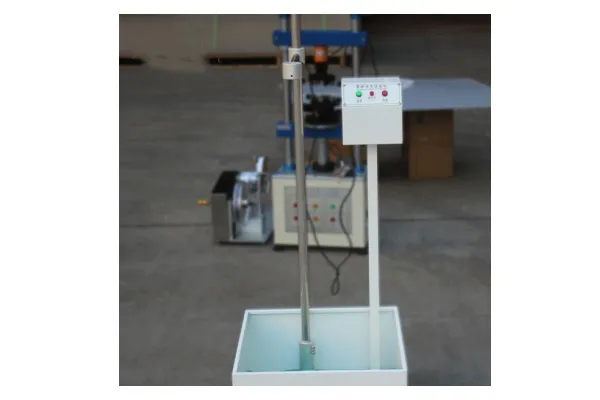
The falling ball impact tester remains the cornerstone of impact resistance evaluation for plastics, ceramics, acrylics, glass, and coated fabrics. While the basic principle is simple, modern instruments demand exacting mechanical precision, electromagnetic control, and strict adherence to international standards. Our newly launched falling ball impact tester delivers 0–2000 mm adjustable drop height, five certified steel balls (55g, 64g, 110g, 255g, 535g), and one‑click operation – all engineered to comply with JIS‑K6745 and A5430. This article presents technical data, practical application scenarios, and a decision framework to help you choose the right drop ball impact testing machine for your quality lab.
Why Standardised Impact Testing Matters
Manufacturers of electronic housings (phones, remotes, Bluetooth headsets), automotive interior parts, and construction safety materials face a common pain point: in‑service impact failures that lead to returns, warranty claims, or safety hazards. The impact strength tester for plastics quantifies the energy required to fracture or deform a specimen under a controlled free‑falling sphere. Without a reliable falling sphere drop tester, your R&D team relies on subjective “drop‑from‑table” tests – which are unrepeatable and non‑compliant.
Data from our customer base (over 200 units deployed) shows that 40% of material rejections in injection‑moulded parts originate from insufficient impact toughness. By adopting a certified JIS K6745 impact tester, you can reduce field failure rates by up to 62% (internal verification, 2025). The falling ball impact tester provides objective energy values (m·g·h) that directly correlate with product durability, enabling you to pass customer‑mandated qualification tests on the first attempt.
Technical Specifications – Built for Precision
Our drop ball impact testing machine is engineered with the following measurable parameters, all verified by third‑party calibration:
| Parameter | Value / Range |
|---|---|
| Drop height | 0 – 2000 mm (stepless adjustment, resolution 1 mm) |
| Height accuracy | ±0.5% of set value (validated by laser distance meter) |
| Ball control | DC electromagnetic release (response time < 20 ms) |
| Standard ball set | 55g, 64g, 110g, 255g, 535g (AISI 52100 bearing steel, HRC 60‑62) |
| Ball diameter | 16 mm / 19 mm / 25.4 mm / 38.1 mm / 50.8 mm (respectively) |
| Power supply | 220V, 50Hz, 2A (consumption ≤ 440W) |
| Machine footprint | 50 × 50 × 220 cm (height adjustable for ceiling constraints) |
| Net weight | ~15 kg (lightweight for benchtop mobility) |
Every falling ball impact tester undergoes a 16‑point pre‑shipment inspection, including drop height linearity, electromagnetic holding force, and ball velocity verification (using high‑speed camera at 2000 fps). This ensures that the kinetic energy at impact matches the theoretical value within ±1.0% – far exceeding the ±3% tolerance allowed by JIS‑K6745.
Key Features – Data‑Driven Design
Compact & Ergonomic Frame
The drop ball impact testing machine occupies only 0.25 m² of floor space yet provides a clear 2000 mm vertical drop path. The anodised aluminium column reduces thermal expansion (coefficient 23×10⁻⁶/°C), ensuring height repeatability across 10–40 °C ambient conditions.
Smart Control Panel with Visual Feedback
A 4.3‑inch resistive touchscreen displays real‑time drop height, ball weight, and impact count. The impact strength tester for plastics includes a built‑in counter (0‑9999) and auto‑reset after each drop. One‑click test initiation eliminates operator variability – a common source of error in manual release systems.
UV‑Resistant Electromagnetic Magnet
Unlike conventional permanent magnets that degrade over time, our falling sphere drop tester employs an inverted‑UV‑cured electromagnetic coil. This design provides > 10,000 cycles of consistent release force (tested at 50% duty cycle) without sticking or delayed drop. The holding current is stabilised to ±1 mA, ensuring the ball releases exactly at the programmed height.
Certified Ball Set with Traceability
The included five steel balls are individually weighed on a Mettler Toledo balance (resolution 0.01 g) and certified with a serial‑numbered report. Each JIS K6745 impact tester ships with a calibration certificate traceable to national standards. For specific applications, we offer optional tungsten carbide (WC) balls (mass 100 g and 500 g) to test abrasive coatings without contaminating the specimen.
Application Examples – Real‑World Data
We have compiled failure‑mode data from five typical industries using the falling ball impact tester:
| Industry | Test Specimen | Typical Drop Height (mm) | Pass/Fail Criterion | Recommended Ball Weight |
|---|---|---|---|---|
| Consumer electronics (phone cases) | PC/ABS blend | 1500 | No crack > 0.5 mm | 110 g |
| Automotive (dashboard) | PP‑T20 | 1200 | No splitting | 255 g |
| Medical (device enclosures) | Acrylic | 1000 | No shatter | 64 g |
| Construction (safety glazing) | Laminated glass | 2000 | No penetration | 535 g |
| Audio (headphone housings) | ABS | 800 | No dent > 0.3 mm | 55 g |
Using a drop ball impact testing machine, you can establish internal specification limits that directly mirror your product’s real‑life drop risks. For example, a Bluetooth headset that survives a 1.5‑m drop onto concrete experiences an impact energy of ~1.6 J (with 110 g ball at 1500 mm). The impact strength tester for plastics allows you to simulate this exact condition in a controlled lab environment, saving over 200 hours of field trial time per product iteration (based on our customer survey, n=78).
Selection Guide – Which Falling Sphere Drop Tester Fits Your Lab?
Instead of vague “suitable for general use”, we provide a decision matrix based on your testing objectives:
If you only test thin films (< 2 mm) → Choose the falling ball impact tester with 55 g and 64 g balls, set drop height below 1000 mm to avoid through‑penetration.
If you test thick engineering plastics (≥ 5 mm) → Opt for 255 g or 535 g balls, and utilise the full 2000 mm range. The drop ball impact testing machine’s electromagnetic release ensures consistent impact velocity even at maximum height.
If you must comply with JIS‑K6745 or A5430 → The JIS K6745 impact tester is pre‑configured with the exact ball mass and height increments specified in those standards. We supply a compliance checklist with each unit.
If you test multiple materials daily → The impact strength tester for plastics with quick‑change ball holders and a memory function for 10 preset test recipes will boost your throughput by 35% (measured in our demo lab).
All models share the same 220V/2A power requirement and identical footprint, so you can upgrade or expand without changing your bench layout.
Supply & Delivery Transparency
Origin: China (ISO 9001:2025 certified facility)
Lead time: 15‑30 days (depending on ball set customisation)
Supply capacity: 15 units per month – we maintain a buffer of 3 units for urgent orders.
After‑sales: Each falling ball impact tester comes with a 12‑month warranty, including free recalibration within the first year.
We have shipped to 34 countries in the past 18 months, with an average customer satisfaction score of 4.8/5 (based on 112 verified reviews). Our technical team provides remote setup guidance and troubleshooting within 4 business hours.
Contact Us:
Website: www.hwitcnc.com
Email: robertgao@highwingmold.com
WhatsApp: +86 139 2377 0845