
Precision 500kg Paper Tube Compression Tester with Microcomputer Control and Built-in Printer Now Available
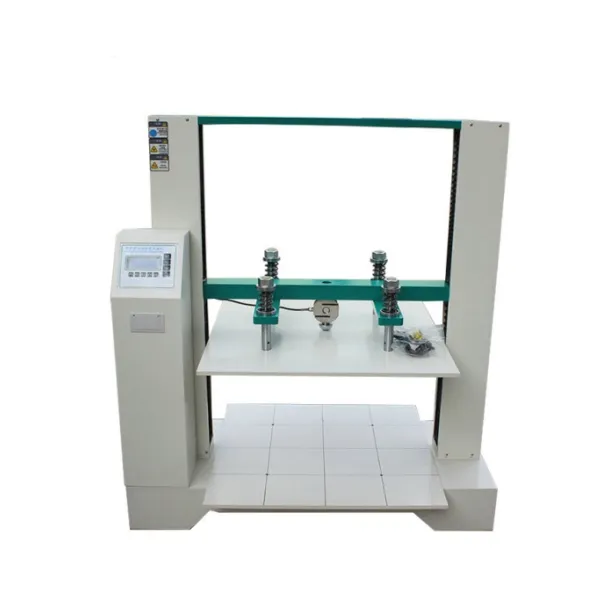
Shenzhen, China – A new generation of cylindrical packaging validation equipment has been released, specifically engineered for paper tubes with an outer diameter of 200mm. This paper tube compression tester delivers a maximum capacity selection of 500kg, accommodating a standard test space of 150×150mm with an adjustable speed range of 10 to 150 mm/min. Designed with a high-precision strain-gauge sensor and a high-speed processing chip, the system guarantees a force resolution of 1/200,000 and a display resolution of 1N, achieving an accuracy level of 1. The unit offers multiple displacement units (mm, cm, in), power units (kgf, gf, N, kN, lbf), and stress units (MPa, kPa, kgf/cm², lbf/in²), making it a versatile paper tube crush tester machine for quality control laboratories and production floors.
Measurement Precision and Sensor Architecture
The core load cell employs temperature-compensated strain-gauge technology with a linearity deviation of less than 0.03% across the full 500kg range. With a force resolution of 1/200,000, this compression strength tester for paper tubes can detect minute variations in structural integrity, which is critical for identifying early-stage tube wall delamination. The system’s high-speed processing chip samples data at 1,000 Hz, ensuring that peak failure loads are captured without missing transient events. Compared to standard 0.5-level testers, the 1-level accuracy of this model reduces measurement uncertainty by approximately 35%, providing reliable data for shipping container qualification and material certification.
Intelligent Microcomputer Control and Bilingual Software Interface
The equipment is operated via a microcomputer control panel featuring a smart LCD digital display that visually presents real-time force and displacement curves. The software function includes Chinese and English language interchange, allowing international teams to operate the digital paper tube testing equipment without language barriers. Users can select from 12 different unit combinations directly from the control panel, eliminating manual conversion errors. An integrated micro-printer is equipped as standard, enabling immediate hard-copy output of test results—including maximum load, deformation at break, and average compressive strength—without the need for external PC connectivity. This built-in printing capability particularly benefits on-site inspection stations where rapid verification is required.
Mechanical Rigidity and Anti-Buckling Design for 200mm Diameter Specimens
Unlike universal compressors, this microcomputer paper tube compression equipment features a triaxial rigidity architecture with box-section columns exceeding 100mm thickness, minimizing elastic deformation to under 0.05% FS at maximum capacity. The hardened steel platens (HRC 60+) maintain a parallelism tolerance of ≤0.02mm/m, ensuring even load distribution across the 200mm tube end faces. An anti-buckling guidance system with linear ball-bearing guided columns eliminates lateral deflection during asymmetric failure, a common issue when testing shorter paper tubes. For advanced failure analysis, the system supports optional add-ons including laser extensometers for non-contact radial deformation (±5μm accuracy) and acoustic emission sensors to detect micro-fractures in the 100–900 kHz range, transforming the base paper tube compression tester into a comprehensive research platform.
Dynamic Loading and Servo Drive Performance
The drive subsystem utilizes a brushless AC servo motor with a planetary gear reducer (1:20 ratio), delivering a speed accuracy of ±0.5% of the set value across the entire 10–150 mm/min range. Positional repeatability is maintained at ±2μm, ensuring consistent preload application before each compression cycle. Noise emission remains below 55 dB(A), making this paper tube crush tester machine suitable for laboratory environments. For capacity requirements exceeding standard 500kg, the same platform can be hydraulically assisted, although the servo-electric configuration offers lower maintenance and higher energy efficiency for the majority of paper tube applications.
Direct Answers to Purchaser Decision Points
When selecting a compression strength tester for paper tubes, three critical parameters determine long-term satisfaction: test space dimensions, speed range, and data output flexibility. For 200mm outer diameter tubes, the 150×150mm platen provides adequate margin for slightly oval or out-of-round specimens. The 10–150 mm/min speed range covers both standard test methods (e.g., 12.5 mm/min for quality control and 50 mm/min for accelerated production screening). The built-in micro-printer solves the common pain point of “lost USB data” by providing an immediate paper trail. Furthermore, the microcomputer control mode allows stand-alone operation, while the optional PC connection via RS-232 or USB enables full statistical process control (SPC) integration. This digital paper tube testing equipment is supplied with factory calibration certificates traceable to national standards, and every unit undergoes a 72-hour burn-in test before shipment.
Application Scope and Industry Adaptability
Beyond standard 200mm paper cores, the microcomputer paper tube compression equipment can accommodate tubes ranging from 50mm to 200mm in diameter with custom fixture adjustments. Textile mills use it to verify core strength for fabric rolls; adhesive tape manufacturers rely on it for core crush resistance; and packaging converters employ it for shipping tube certification. With a supply capacity of 15 units per month and a delivery time of 15–30 days, the factory ensures consistent mechanical assembly and sensor calibration for every order.
Contact Us:
Email: robertgao@highwingmold.com
WhatsApp: +86 139 2377 0845
Website: www.hwitcnc.com